Depending on the news, “new space” is commercial, innovative, well-funded by billionaires, and changing the world. The site of a Falcon 9 booster returning to land after being flown eight times tells a story of change, a revolution that, as predicted, is being televised, now in high definition. Crews that are not NASA astronauts have now launched to the edge of space in Virgin Galactic’s VSS Unity. Soon more people may go sub-orbital on Blue Origin’s New Shepard or into orbit aboard a SpaceX Dragon. This is not your father’s astronaut. And that’s a good thing. But right behind, we hear the other story, how “space is hard,” with news of an Electron rocket failing again, not far from a previous failure. Or we hear the new ULA Vulcan launcher engines are not ready as planned, indicating the heavy lift, reusable Blue Origin launcher will (again) be delayed as well. Yet it’s easy enough to pause a moment and get some situational awareness, even if we know we must keep moving north down the valley and onward up the mountain.
We need a daisy-field effect, where an Electron or a Falcon is one daisy, and then you zoom back to see the field full of flowers. Sometimes, we need to step back, up and above. I have the occasional picture of the Space Shuttle taken at an odd angle. These are my favorites, taken from somewhere people don’t usually crawl, a reminder there is more to what is under heaven and Earth than you see in the stock footage. Global commercial launches could use a similar odd angle. For a starting point, we go to the US Department of Transportation.

While something is to be said for “minimally processed”, the DOT data gets at least some crawling through and around for a better look. The DOT does not include the Vega rocket or the recently launched Virgin Orbit 747 LauncherOne rocket, so add those. A review to make sure everything is in order shows some discrepancies, like the DOT including the Dragon demonstration flight but not the Cygnus doing the same. Include both to be consistent. Do a dozen similar puts and takes of a launch here or there. Add launches since 2017, and you will have a curious picture of global commercial launches. (Left pending is completing the picture for launches from China. These might not be entirely commercial, but for all practical purposes, they will compete for some part of the global orbital launch business.)
![Global commercial launches since 1990 up to the Soyuz-2 launch of OneWeb satellites on July 1, 2021. Credit: zapatatalksnasa.com [Update February 28, 2022: For the continuously updated data and graph of the above see Global commercial orbital space launches.]](https://zapatatalksnasa.com/wp-content/uploads/2021/07/23b-graph-global-commercial-launches-since-1990.jpg)
As the picture develops, there comes a sense of déjà vu if you’ve been here before. In the late 1990s, there were also a dizzying number of launches, such as the Atlas and Delta rockets launched for the private sector, carrying the first dreams of low Earth orbit satellite constellations. There were 41 commercial launches in 1998 compared to 43 in 2020. The “LEO Launch Frenzy” was driven by the dream of satellite phones. The Iridium constellation, in particular, was supposed to revolutionize global communication and change everyone’s life as we knew it – the story is that the name came from the layer of Iridium that marks the death by asteroid of the dinosaurs. As happens, a cell phone in every pocket would change the world and us, except with cell towers here on Earth, not in orbit.
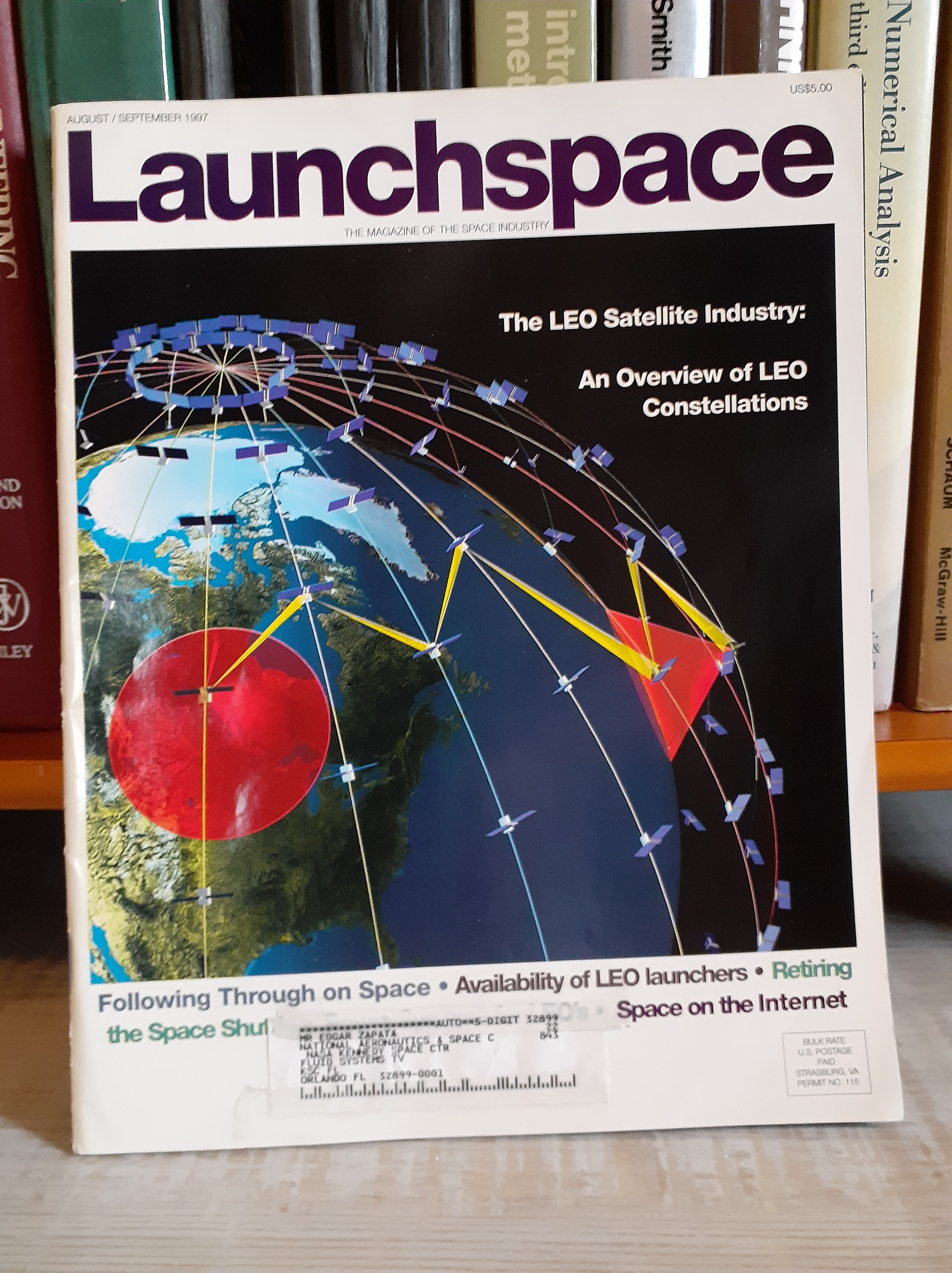
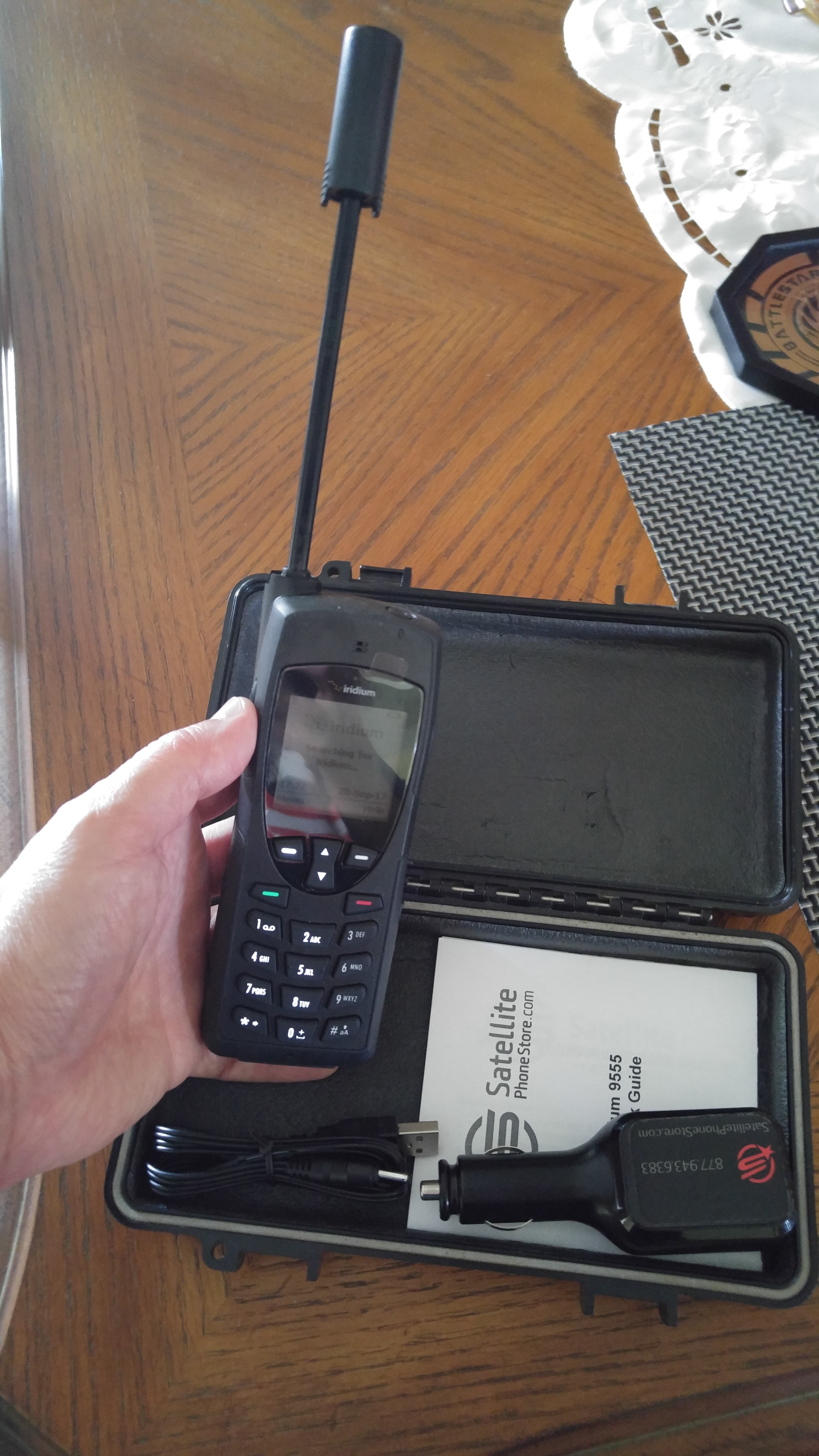
Oddly, Iridium lives on to this day. I could not imagine that in 2017, I would rent an Iridium phone. Hurricane Maria had wiped out the power grid in Puerto Rico and all communications, from landlines to cell towers. Iridium had placed enough satellites in orbit years earlier, and when bankruptcy came, they had a functioning and somewhat capable network in the sky. It operates to this day. It’s curious how an ambitious business case can close if you don’t have to pay back your up-front costs (and creditors). One day, you somehow have that oh-so-important connection that only needs a handset. Arriving in Puerto Rico a few weeks after Maria – dinner with family by lamplight after the adventure of getting there – priceless. Knowing there was a means of communication if we needed it – not bad.
Which, of course, brings us to the 800-pound elephant in the data – Starlink. Oddly, Starlink is excluded in some data sets about commercial launches or satellites because one company is not paying another to make or launch satellites. I have instead decided to acknowledge the gorilla. More so, I’ve given the gorilla its own seat at the table by separating Starlink launches from other commercial launches. This is not entirely arbitrary. The DOT definition of what is “commercial” states that a commercial launch is a “launch that is internationally competed (i.e., available in principle to international launch providers) or whose primary payload is commercial in nature.” It would be a stretch to say Starlink is not “commercial in nature” and exclude it when its reason for existence is to revolutionize commercial broadband.
Here, we begin to see differences between the late 1990s and today in quality, if not quantity. For one, the technology of the Starlink satellites is a generation removed from that of the 1990s. The form factor recalls a cell phone, flat, compact, ready to connect and spew news, gossip, and tweets. It also recalls the skateboard platform of a Tesla and now most electric vehicles. Laser crosslinks between Starlink satellites can eventually make sure that if one satellite cannot find a ground station, it will simply find another satellite that can. For those who show their age, like us vampires reminiscing about summer in Paris in 1892, we know what we called a computer in the heyday of Iridium in 1998. Then we see what we call a computer today and appreciate the difference.
More so, seemingly forgotten in the frenzy of Atlas and Delta launches in the 1990s, there was an expectation of a low-cost launch then – “coming soon to a theater near you.” Except that movie never arrived. At the same time LEO constellations were trending (before trending was a thing), all kinds of launch vehicles were also in the news (if not in the air). Reusable launch vehicles were uniquely linked to the eventual success of LEO constellations like Iridium, Teledesics, or Astrolink. Every constellation seemed to have a launcher, a Rocketplane, a K1, a Roton, or an Astroliner. If a constellation needs lots of launches quickly, a reusable launch vehicle needs lots of launches to close its business case. The twain would never meet.
And so, another difference since the 90s. There actually is a vehicle today that has much lower costs. As foreseen, it’s also reusable (mostly). There is no waiting today. The business case of a satellite constellation is no longer at the mercy of someone else’s business case for a launch vehicle. That vehicle with lower costs – the keyword being costs – actually accompanies the Starlink constellation. For SpaceX’s Starlink, a Falcon 9 launch, already affordable in price, is likely even better – an internal item on the ledger at “cost,” not “priced,” with a profit and all that on top.
That’s only the start of the Rorschach test on the global commercial launch chart. Do you see butterflies or tigers? The seeming symmetry between 1998 and 2020 is very likely superficial. The facts on the ground (and now in space) are that advances in satellite and launch technology could make all the difference between failure then and success now. Still, a question was explored back then that could prove just as important now. Market elasticity.
If we build it, will they come? This has been the eternal question in space launch. An “elastic” market sees more sales when prices drop. More so, the launch supply grows, and new products emerge with the demand for the rocket. We cannot imagine what will go atop lower-priced rockets one day. Growth makes the pie bigger, instead of everyone trying to grab more slices of a small pie.
Some work trying to figure out this question, like the 1994 Commercial Space Transportation Study, cheerily concluded there was much promise. Launch market elasticity was there, if not in every market, then in just enough. Demand would increase as launch systems reduce costs and pass those improvements to customers as reduced prices. The ideas for what goes atop the rockets would flourish, like Starlink, but also rides for tourists or private space stations if you want to get some work done or just to take in the views. A look at global commercial launch data would seem to be the way to answer the question coming from the back seat – are we there yet?
Like an economist, but not the one Truman asked for, on the one hand, it’s difficult to imagine all those Starlink launches without lower Falcon 9 costs. In this sense, the drop in Falcon 9 “costs” caused (internal) demand to increase, deciding to build a Starlink constellation, the very definition of market elasticity. On the other hand, that lower internal cost is not a “price” or the whole market. A functioning, healthy market has many players, different buyers and sellers, and never just one buyer (like NASA) or seller (like SpaceX.)
Still, there are promising signs of growth. Since 2017, the uptick in global commercial launches has held firm. It is not quite enough yet to draw a strong trend line, but it is definitely enough to give pause. The knee of an S-curve looks like a little squiggly blip just after nearly nothing but a faint heartbeat. Yet many a knee in an S-curve has resulted in a revolution or two. One day in 1983, we got a kick from seeing the “car phone” the company gave our brother. The battery weighed about as much as a small lead acid battery. (Oh wait, it was a small lead acid battery.) In the blink of an eye, it’s 2000, nearly everyone has a cell phone, the thing fits in your pocket, and companies that didn’t pay attention are in bankruptcy. Of course, we still complain about the battery life.
The uptick in global commercial launches since 2017 has as much to do with small launches and the Rocket Labs Electron as with medium launches and Falcon. All this would seem to have come at the expense of the Russians and the Proton, but this year has seen a little more life in that Proton, enough to not write it off – just yet. The end of the shuttle and the start of the NASA commercial cargo and crew launches have also helped the uptick since 2017, with a few launches a year, give or take, since 2015. NASA is now part of this equation of commercial launch, not just as had been the case with the one or two science launches a year procured on a commercial basis. NASA’s “commerce” is part of an international supply chain that keeps the International Space Station (ISS) safe, sound, and robustly stocked.
To be elastic then or not to be elastic?
It would seem the data is still being coy, hiding the answer. Amazon appears to think “prices” are already low enough, buying nine Atlas V launches to get started on its Kuiper satellite constellation to compete with Starlink. However, if you have a mind to launch most of your constellation on mostly reusable Blue Origin New Glenn rockets, that will also be an internal cost, and the real deciding factor may just be a rush sparing no expense – for now. In this view, the curious question stops being market elasticity for launchers and becomes market elasticity for launchers/constellations as a whole system. Just when you think you have some answers, the question changes.
Lesser known, there was a LEO constellation planned once upon a time by Boeing, a brief flirtation with manufacturing and operating a system. This would have been quite the departure from Boeing as a manufacturer, handing off hardware to customers, the airliner to airline model. The DARPA XSP, my last project before retiring from NASA, was linked to such a constellation. Once again, there was a custom-made demand to justify the investment in XSP to supply improved transportation. Boeing opted out at the end, on its satellite constellation first, and not surprisingly, on the XSP later. Why get all dressed up with no need to go?
Perhaps the Rorschach chart should have launches besides operational satellite count or bandwidth deployed? It could as well try to show a measure of faith, as much required as supply and demand. A business case is one thing, an ability and a desire to take risks is another. Not too long ago, at a “big aerospace” meeting, our lead segued into a discussion about risk. The question posed to the room full of industry veterans and some just starting off was simple – a long time ago, your company took some significant risks that could have sunk the massive company you are a part of today. Would you see doing this again? We had been around long enough to know this was a lawyerly question, one we knew the answer to. The purpose was to move the discussion toward the topic of risk. Enough of an answer would have been some blurbs about being a company with responsibilities to shareholders paying predictable dividends to people who like predictable. Surprisingly, the room went into a cacophony of responses as everyone responded at the same time. It was a good question.
At its current rate, there will be 47 Falcon 9 launches this year. It’s a simple calculation: the launches to date in 2021, how often they launch, and how many you get if the pace keeps up. It’s also unlikely, but still, at any rate, this year, some single SpaceX rockets will be reused more often than the entire launch rate of other launchers. To harken back to recent years, we saw about 40 commercial launches globally. Now, we have a launcher that is at least capable of doing that on its own, with a reusable fleet of boosters.
We will always need unique angles, crawling around in data to get a picture that says more than the traditional shot posed and at a distance. We are awash in data, investments, public and private, satellites deployed, space debris, and valuations. In the end, what will we see in these pictures? Today, I see growth and possibilities that did not exist before. I also see that by all indications, this time is different.

 Zapata Talks NASA