There are flying machines that stick in the mind, a Concorde, a Shuttle, a Valkyrie XB-70, or a Boeing 747.One machine that hardly flew but did this trick was the 1920s German Dornier X airliner, an early massive flying boat with 12 engines. Its wings had a crawl space so the crew could reach the engines and perform adjustments – in flight. Scary but true. The only one ever made was soon retired, so there was a lack of time to imprint on the public imagination. If the aircraft engine technology available at the time was not quite there yet, why, obviously, there had to be a way to – as we used to say in the Shuttle program – “mitigate” that. So, crawl space, engine adjustments – while flying. Yet right around the corner, a few years away, was the DC-3, a shiny, modern airplane, some of which are still flying to day.

For a few generations now, transportation technology seems to be at a standstill, and the turn in the curve and the DC-3-like leap have always been a mirage on the horizon. In NASA, I always knew a plan that did not reach its main goal before my interns would retire was not a plan. (Oddly, this was not the consensus as I was told, “think long term.”) There has been no supersonic airliner after the Concorde. If anything, airspeed has slowed since the 1970s for the sake of gas mileage. Though speed is not the major hold-up in air travel just now, lines and security being what they are. We still await the bullet trains, too, at least in the US. And while we are at it, if any of this does arrive, it must be in a way that does not adversely affect the climate or Earth’s limited resources.
Yet this last week would seem an exception, with signs of progress and urgency. There were engines, tiles, rollouts, and stacks that recall Shuttle engines, tiles, and stacks – except for the part about urgency.
…my senses fused into an oil and water combination of amazement and boredom.
Installing engines on a Space Shuttle orbiter was no quick affair. The first time I saw this first-hand, my senses fused into an oil-and-water combination of amazement and boredom. I was amazed at the precision and care of the technicians in physically demanding positions. I was also bored seeing so few pages of the paper procedure stamped off after so many hours. Patience is one of the particular set of skills I acquired in my years at NASA. Many years later, I would be looking at data for every engine ever installed at Kennedy, dates, tasks, teammates noticing that it somewhat matched replies engineers gave when asked about how long this or that task took. “Somewhat,” meaning engineers invariably gave the low side of any time or effort when asked – an acquired skill for poor memories.
Engines were routinely removed from the Shuttle orbiters a few weeks after they were placed comfortably in the processing hanger. Platforms and protective covers were all over, and the hospital patient’s IVs were all attached, as we said. Then, the engines were re-installed a month before the orbiter was ready to leave the hanger. By the mid-1990s, someone finally admitted on paper that removing engines between launches was unnecessary. Yet the task would continue, with good reason. There was so much work to do on the Shuttle orbiters that we had to remove the engines to make room for everyone else to work in the same area at the same time.
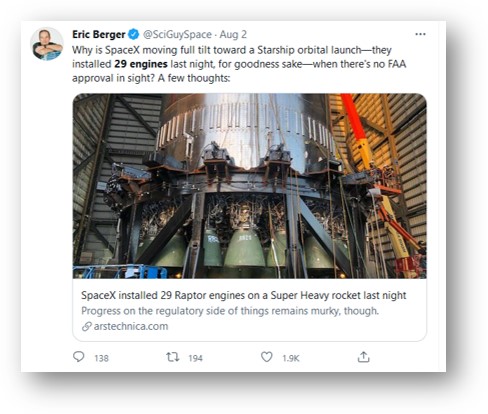
So, it was a pleasant surprise to wake up one day and see the SpaceX team installed twenty-nine engines – in one night. Twenty-nine. Someone will inevitably say these are slightly smaller engines than the Shuttle’s, but not by much. In NASA-speak, the Shuttle engines were just the start of what we called our “plumber’s nightmare,” from the Shuttle orbiter all the way up and through to the orange external tank and out to the endless facilities. And that was just three engines. What the plumbing must be for twenty-nine engines on a Starship boggles the mind, mine at least.


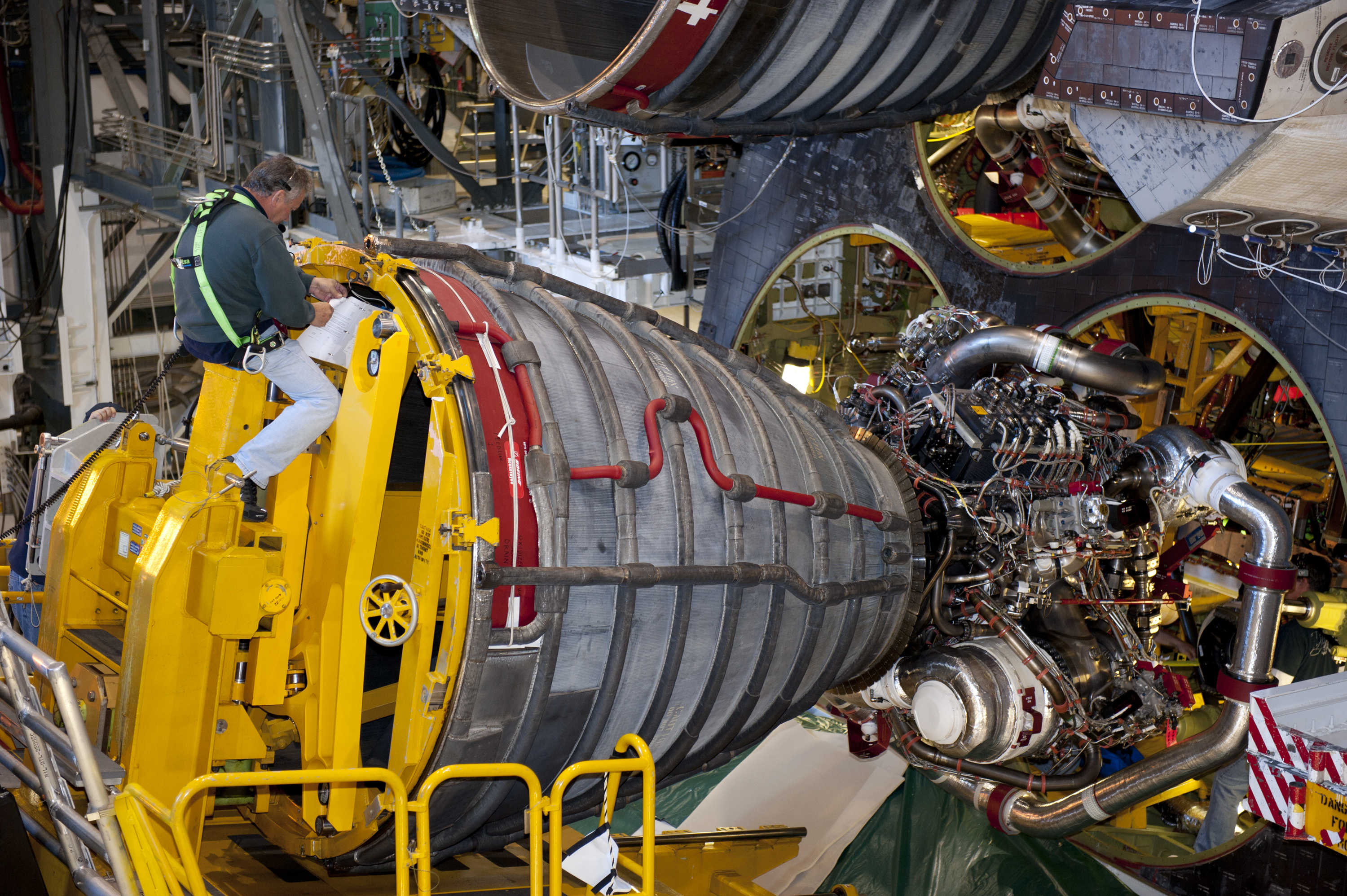
NASA: ‘There’s the Orbiter, Go Put a Motor in It‘ – “There are personal sacrifices,” Rysdyk said. “Kids’ rehearsals go out the window, trips go out the window, birthdays go out the window because what’s important is that this gets done.” Credit: NASA.
Tile was a more mysterious matter. When I arrived at Kennedy, our routine began with a morning gathering, coffee in hand, and a roundtable. Engines, check. Reaction control, check. So on and so on. A problem worth noting here, nothing worth reporting there, something off-topic to lighten things up. It was the comforting hum of everyone retelling the story about the day before. We were big on recounting events, and perhaps my writing here is what remains of that compulsion. The tile group had a calm and repetitious refrain, that moment in a church when you know the lines, something like “five tiles removed, three tiles replaced.” And some new tiles with problems were added to the count. It was never much any single day. Some days, the count went backward, and more dents and dings were picked up than fixed.
The Shuttles “flying brickyard” is now the SpaceX Starship flying bricks, coolly hexagonal shaped. A generation or more removed, yes, and with what appears to be a novel means of attaching them, but still, the hexagonal bricks are a close cousin. Oddly, seeing a tile removed and replaced is an operation that as standard as it was for the Shuttle, is not one I ever saw first-hand. A tile would be missing one day, a hole in the pattern, and then sometime after, as if by magic, it was back, the technicians removing and replacing it in the middle of the night – between midnight and morning. It befell to do this when the least people were around. The noxious water-proofer we used was not something you wanted to have around hordes of people working nearby. The post-it note-like tags came some years into the Shuttle program, which Starship also uses. (As to urgency, we found out years into the program that bad tiles were only taken to the nearby shop once or twice a day in batches, not in the moment. And NASA did invent newer and much harder tiles, of course, but as the program ended, these had only made it onto the Shuttles at the rear.)
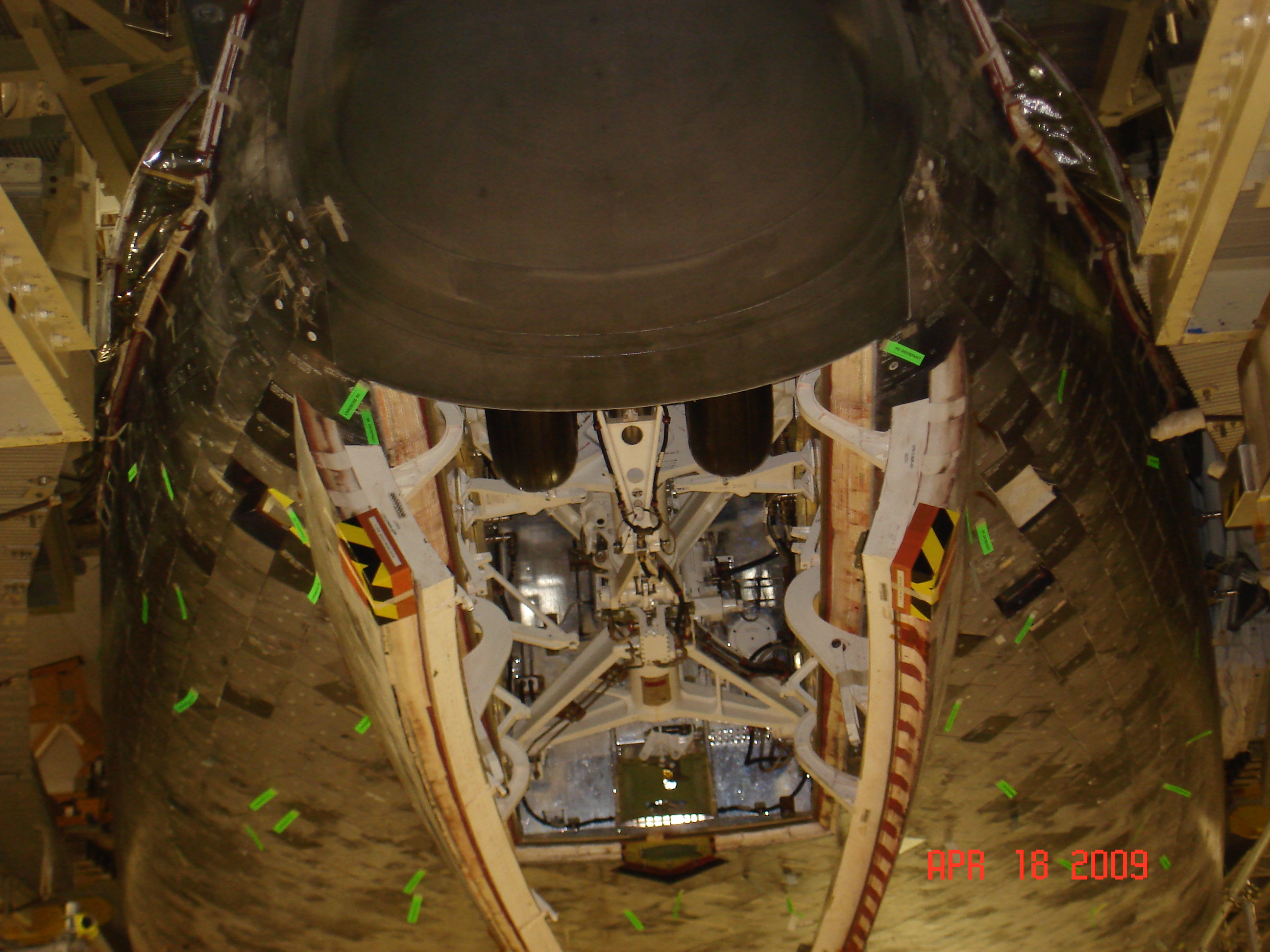


The time to get thousands of square feet of tile ready for a flight is likely somewhere between the time for a Starship taking significant risks and a Shuttle taking none. That is, pending even better materials, an innovation around the corner that will put a skin on a spaceship coming back from orbit that needs nothing more than a good walkaround or some drone doing a surface scan.
The SpaceX Starbase appears more shipyard than spaceyard.
But in all this, engines or tiles, something else is not as obvious in its absence. The Starship is not ensconced in a climate-controlled hangar. The SpaceX Starbase appears more shipyard than spaceyard. Having prepared and maintained liquid oxygen systems, flight and ground, I can say a firm job requirement is an obsession with cleanliness. We once had a liquid oxygen line open momentarily, outdoors, with some plastic flapping in the sea breeze to keep out the dust. Inevitably, there was a speck. And the tiniest speck that flew in would be wiped away, the rag with cleaner bagged (also noxious, eventually banned). UV lights were in vogue too once, leading to still more obsession over the cleanliness of flight hardware for liquid oxygen. (We discovered UV lights generate paperwork about residues.)

Obsessions of the Shuttle sort do not seem to be holding back the Starship spaceyard, and more likely, they need not anyway. The pressures and temperatures of rocket engine are not far removed from today’s ever demanding aircraft engines – engines routinely removed and replaced quickly. The day too has come for the more advanced tile materials to shine, the next gen materials that never covered new Shuttles, and were only used here and there in Shuttles after seemingly endless analysis. As well, industry handles cryogenic systems quite well every day, minus the bunny suits and the obsessive cleanliness as a job requirement. Perhaps that sets us somewhere after the Dornier X, with some “mitigating” still to do, but at least on a straight line to some wondrous leap out of seemingly nowhere, like the DC-3.
As with the costs NASA and SpaceX are targeting for the Starship development, leaps might still happen – a hexagonal, mechanically attached tile, stainless steel weld, and twenty-nine engines at a time.

 Zapata Talks NASA