The choice was made, so the outcome was determined if not known. In engineering as in life. Not everyone accepts this notion quite the same way or as gospel. Making a choice and living with a determined, if unknown, future sounds fine in theory. In practice, though, determined leads to deterministic. As in destined. Fate. Meaning no longer in the realm of what can be affected or controlled. This is when the word “mitigate” comes in right on cue because giving up control is not easy. In operations, we were always on the tail end, facing the consequences of design decisions long ago. The common refrain “Sure we can” was part of the denial that the latitude in operations was thin, a reaction, not a choice.
Design choices are like this. Something in the human mind wants it all. We like our choice (perhaps the easy one), but only with the best outcome. Naturally, it’s easier to believe a design choice made up-front and in the here and now will echo through the ages when the result is grand. Not so much when the assessment returns and says the future is not so rosy, because of decisions made months or even years ago.
Usually, this design rule is pictured where Y has to do with freedom, like the number of decisions already set (or the money already spent), and X is time. Your first steps decide so much. Destiny awaits. Worse, the die has been cast, and destiny’s actual form and shape are still to be discovered. It’s no wonder the concept was often touted in any systems engineering slides and just as quickly set aside. A simple set of changes any time ahead would still get the boat back on course in the far-flung future, right? We could mitigate that. In the real world, our design fate is what we make, but only if we make difficult decisions in the here and now.

Choices, design, and launch reusability
There is a particular set of launch system design choices around reusability. If we can think of examples where mass was missing when it should have been there, being considered an enemy of the sacred payload mass, what happens when we think of adding mass to reuse a rocket? Better yet, to reuse a rocket cheaply? A first fork in the road is legs and fins, or wings and things? Both designs can return a rocket stage to port. How to decide?
At first glance, each approach to returning a rocket booster would list pros and cons. There are hidden items for each, things not as glaringly obvious as the fins or flaps. Recently, the DARPA XSP tried the wings and things on the booster, unlike the operational Falcon 9 booster, which returns thanks to legs and fins.
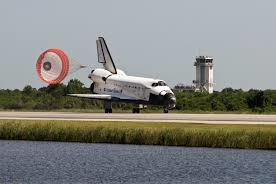


The Space Shuttle orbiter returning to the KSC runway (via wings and things like parachutes), the Falcon 9 boosters returning to the landing zone after launch, and the envisioned DARPA XSP booster returning to the launch site after releasing its second stage.
Any assumption that design choices have clear outcomes, results written in stone alongside the choice, also assumes ample understanding. To the degree that understanding is absent, expected results get murky. It may still be just as inevitable and determined a consequence, just that it’s unknown. This we call risk.
| Reusing a rocket via: | Pros | Cons |
| Horizontal Landing Dissipate energy/velocity over the body, to slow down | Passive thermal protection does most of the work on return Smooth return Cross-range, can reach many landing runways very far apart | Complex thermal protection system to account for cryogens plus aerodynamic heating Runways may not be where they are needed Active systems, actuated aero-control surfaces, landing gear |
| Vertical Landing Dissipate energy/velocity by re-igniting the engine. Thrust to match descent. | Landing sites can be mobile (a drone ship out at sea) or have a smaller footprint on land Extensibility from expendable systems Extend learning to off-world systems (landers) | Must make the vehicle larger to hold extra propellant; propellant management Engine re-ignition close to ground taxes the engine and areas aft; aft wear and tear Active systems, actuated fins, landing legs Difficulty exiting landed vehicle in an emergency |
There is a way to look at these two design choices that are not as stark as this or that – instead, as decisions along a spectrum, that spectrum being the shape of the returning rocket. As measured by the length-to-diameter ratio, go longer and skinnier, and you have the Falcon 9. Add wings, like the XSP, the SpaceX Starship, or the Space Shuttle Orbiters, and the ratio drops for the wider shape.
Seen this way, the choices for launcher reusability are on a spectrum. Curious, yet the conundrum persists – is there enough information that the measurable consequences of any of these choices are known? Probably not if we consider that reusable launch systems, whether the booster or the part that goes to orbit, are few and far between (two to date). Like the choices we make in our lives, when there are few data points, the consequences are not always clear (as much as we may have confidence otherwise).
Lacking information then, legs and fins or wings and things? Why not try each.
As much as seeing a Falcon 9 landing never gets old, as much as it may seem, wings and things lead to extremely expensive Space Shuttle orbiters, we see in Starship mishaps that there remains much to learn about these design choices. Inside the extended barrel of a Falcon 9 (or Starship) comes things we don’t see – for liquid acquisition. Pumps prefer liquid, not gas. Similarly, many surface actuators, gear doors, and separation mechanisms are behind the scenes for a winged shape.
We can’t be sure yet of the shape of (most) things to come, shapes that may persist for generations, the way all airliners have looked alike since the 1960s. We can be sure that more public and private investment is needed to explore these choices and what they mean. Only then can we all make better choices ahead, with results still determined by choices but also known ahead of time from practice in the real world.
Also see:
- From SpaceNews, the DARPA XSP program terminated in January 2020.
- Among the design options for a rocket stage’s reusability are parachutes as planned with the Rocket Lab Electron rocket.
- The Space Shuttle Solid Rocket Boosters also had an element of reusability (akin to salvage) enabled by parachutes and the robust aluminum and steel cases that go with solid rockets.

 Zapata Talks NASA
2 thoughts on “Reusability – legs and fins or wings and things?”