It is January 13, 1982, and an Air Florida 737 takes off, fighting to climb but hitting the 14th Street bridge here in Washington, DC. Snow had fallen all day, and ground crews deiced the plane, except then an hour went by, and the wings iced over again. The pilot had never flown in snow. This event is part of the local lore. In DC, there is hardly a place untouched by lore, the silent background in which life happens. There is the Pentagon, and the side destroyed on 911. Or that once in the exact center in the courtyard of the Pentagon was a kiosk. Having a hot dog here was memorable, knowing I was eating at the one place on Earth targeted with the most nuclear weapons. Or there is Marie Seurat’s boarding house, where the conspirators met to plan the assassination of President Lincoln. Today, it’s a Chinese restaurant called Wok and Roll.
NASA is much like a city with history on every corner. If you look, it’s easy to go meta in the layers between the lines. The lore is everywhere – in buildings, spaceships, projects, and papers. The references in the back of that report go on and on. They are the backdrop once alive with the engineers and scientists that came before.
Recently, Reaction Engines, a UK company formed in 1989 shortly after I arrived at NASA, declared it was closing. It’s a wonder the company lasted this long. Spaceplanes are long gone from NASA’s lexicon and everyone else’s visions of humans traveling to orbit as if hopping on a flight to LA. Though no other vision things of note have come along since.
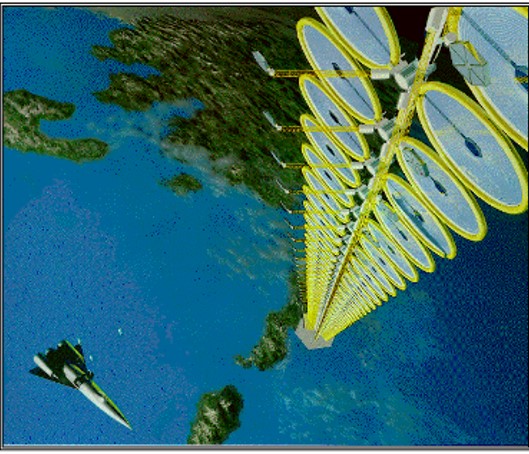
Backtracking to the mid-1990s, the lore about spaceplanes is about using them to build space solar power stations. It’s not as if a regular cadence of construction trucks to space could afford to throw away more each flight than was delivered. Fully reusable spaceplanes would be on the shortlist for constructing any large-scale facilities in space. But try as we might, and I was among the number crunchers, we could not put up the power towers beaming energy down to Earth faster than dirty plants were built on the ground.
Putting aside costs in the foreseeable future, this was about exploring new energy sources with resulting CO2 emissions much less than the CO2 generated from old energy sources. With continued investment, the cost side of the equation might catch up. If NASA did the risky R&D with no promise of return and succeeded, the private sector could follow, business cases in hand.
As if talking about the power available on the Starship Enterprise, we spoke about the starship Earth producing 10 terawatts back then. Today, that number is at 30 terawatts and counting. Much of this power came from coal power plants. The growth in other cleaner energy sources making inroads, such as lower carbon natural gas, terrestrial solar, windmills, and battery technology, lie farther ahead. These are now well beyond our 1990s-ish expectations. But we just couldn’t foresee putting spaceplanes in orbit at that moment fast enough. Not even on paper. Still, we knew we should keep learning and invest in technologies that could change the math – hopefully soon. Modern society, as we know, is not built for the relatively rapid change in the climate that is likely from our greenhouse gas emissions or the new, warmer state afterward.
Decades later, in January of this year, NASA released an updated verdict on space solar power. Again, the numbers were crunched for costs and greenhouse gases. It’s no secret that terrestrial technologies like photovoltaic panels on your roof “paid back” on CO2 in a couple of years long before the technology would pay back as quickly on cost. When I first visited the Florida Solar Energy Center in the 90s, rooftop solar panels on a house would take a lifetime to pay back an initial investment. Then, one day, that number was ten years, and then merely five.
Not surprisingly, the math on a desired technical result adds up long before it does on dollars. Think rockets – we can reach orbit but are still figuring out how to do so affordably, fulfilling the visions of thousands of people heading back and forth to Starbase 12 – daily. And yet, for decades, in cases with sufficient value, launching to orbit makes sense.
The 2024 NASA report again confirms the space solar advantage for greenhouse gases and the continued disadvantage in terms of cost. Though the puts and takes and asterisks are debatable, history repeats except for how, after decades, we should recognize that there are better questions.
Do this long enough, and you start to realize the math, models, charts, pretty pictures, and assumptions – well, they are curious and must be done. The real value in each iteration is in discovering new, better questions.
The infamous philosophical “trolley problem” presents a choice: you can pull a lever to divert a runaway trolley from a track with five people or another track with only one person. There is no stopping the trolley. (This is not the Kobayashi Maru.) The variations in this scenario are as endless as we can imagine. The one individual is your child. Change your answer? The lever is removed. Instead, you might push a single individual onto the first track to cause the train to divert away from the track with five people. The people on one track are prisoners. Finally, some ethicists debate the obligation to act – at all. (At the dinner, these should be seated next to the incurious uncle.)

A utilitarian sense adds up the numbers as if we can resolve any dilemma with the correct algorithm. There are firm inputs, many guesses, and some healthy arguments about the fundamental nature of the situation. Spreadsheets, or soon an AI, tell us what we need to know.
As resources are finite, it’s proper to ask which technologies will most efficiently obtain an objective. How do we lower greenhouse gases while producing the energy for everyone to live free, prosperous, and fulfilling lives? This way, resources are not misspent that can be put to other problems and dreams. Other priorities need resources, too. But do we declare a technology “No-go,” like space solar power and others, by merely concluding it fails to be competitive with what we pay the electric company today?
Other technology decisions also wander into limited views from limited questions. The NASA space solar power report states, “For comparison, the average energy cost of a US household in August 2022 was 0.167 $/kWh.” Yet properly analyzing space solar power would have included the cost of inaction – natural disasters, rising seas, mitigating horror, and other human trauma. That cost would have been booked to current fossil fuel energy sources and their cents per kilowatt-hour (for starters, with the costs of pollution, healthcare, early mortality, and environmental impacts and cleanup following along.)
But even an expansive, complete view of costs and benefits misses the point. It remains rooted in numbers and cents. This is a utilitarian view reduced to utility bills.
I still field questions on space solar power here and there, providing my two cents on the dollars and cents. I was once on the side putting out the report, receiving the feedback poking holes. These reports are not easy, and the messenger never receives a medal. The peanut gallery questioning assumptions, impacts, or costs of technology decisions is also not new. Often it’s how we improve our analysis. More rarely, the lively debate improves our understanding.
After Flight 90 hit the 14th St. bridge, its tail section broke off. A handful of survivors were in the Potomac. The bridge is named after one survivor who helped others – Arland D. Williams Jr. After repeatedly assisting others, he could do no more, disappearing into the river. Another survivor was saved by a bystander who dove into the deathly cold water and ice. The FAA report concluded the cause of the disaster was pilot error. The pilot should have called for deicing again or aborted the takeoff. The notion of ice did not break through the barrier of experience that did not include such conditions.
Context is not always in the references of a report. A spaceplane company folds. This same year, NASA again says the numbers on space solar power are challenging. Yet better questions should persist. A complete view of costs and benefits – a start. Also, more context should include a sense of what our actions, like continued investment, might achieve. We are alive to see the advance of terrestrial solar and wind power happening faster than anyone ever predicted.
Having created a vast global power capacity, with it came a problem. Will trying to save us from ourselves await a business case? An analysis of risks for our actions, but not for our inaction? Or do we dive in?

 Zapata Talks NASA
Edgar,
It is always good to again interpret âthe Oracleâ for wisdom on all things space.
Just out of curiosity, do you have channels to those developing the products which will inform the Transition Team, the Landing Team and the Beachhead Teams for the incoming Administration?
Iâm assuming you do. Perhaps you are even on one.
Just curious as it appears significant change is coming, and maybe quickly. IMHO the nation would not be well served absent your insight and experience.
Again, just curious.
Thanks.
[cid:image002.png@01DB342A.902EAB50]
DALE KETCHAMââââ
Vice President of Government & Community Affairs
,
Space Florida
o: 321â730â5301 ext 225
|
m: 321-427-7915
DKetcham@spaceflorida.govDKetcham@spaceflorida.gov
|
http://www.spaceflorida.govhttps://www.spaceflorida.gov/
505 Odyssey Way, Ste 300, Exploration Park, FL 32953
[Facebook]https://www.facebook.com/SpaceFlorida/
[Twitter]https://x.com/SpaceFlorida
[YouTube]https://www.youtube.com/@SpaceFlorida
[LinkedIn]https://www.linkedin.com/company/space-florida
LikeLike
Thank you so much Edgar. Happy Thanksgiving. Frank
LikeLike
And a Happy Thanksgiving to you too Frank.
LikeLike