For my accompanying blogs, see:
- Reusability, priceless, April 14, 2021
- Commercial launch trends – what do you see? August 22, 2022
- Three graphs and a truck, August 23, 2023
The data (MS Excel) > SoP Falcon Reuse Data Zapata as of 02-07-2026 launch.xlsx
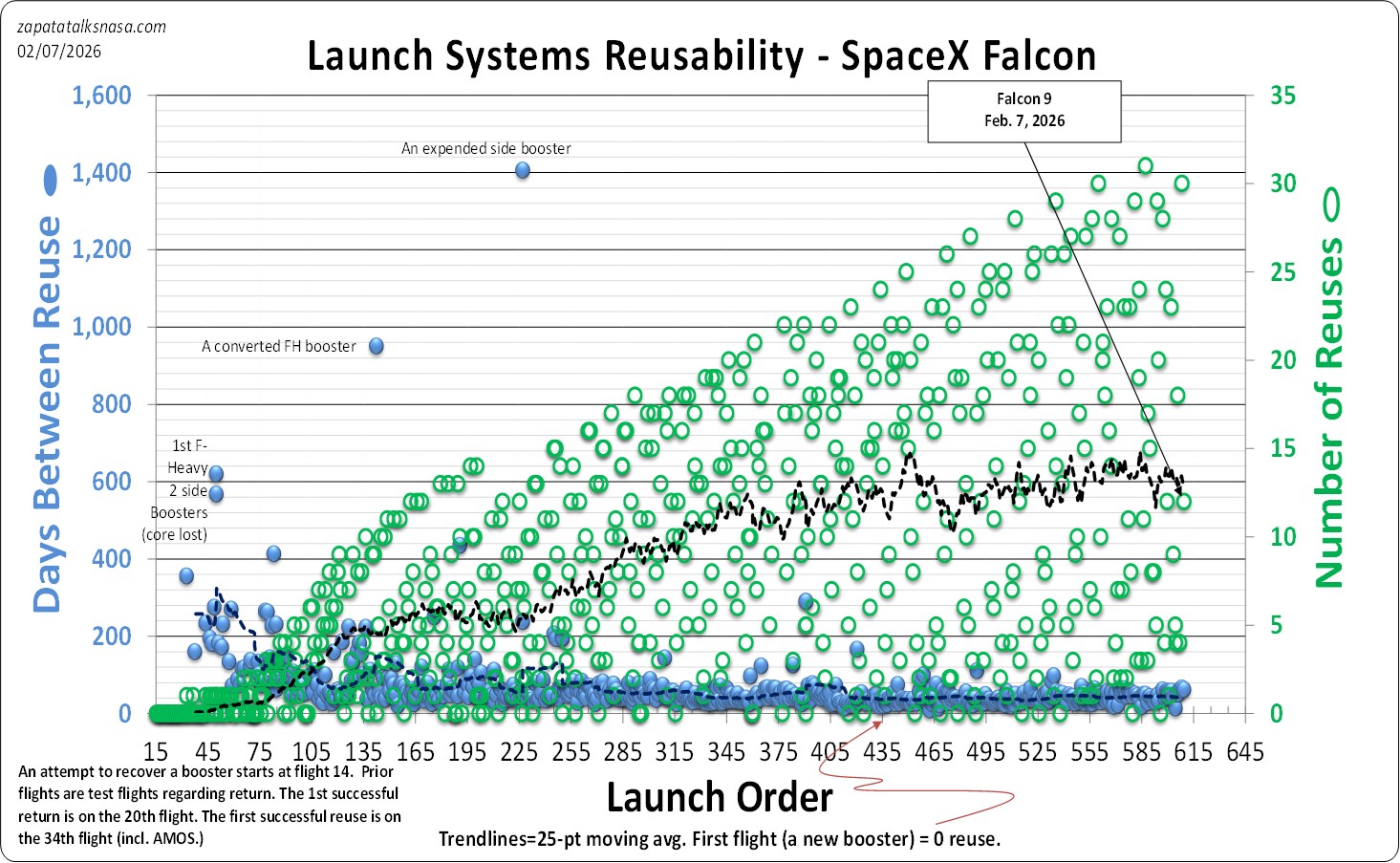
What is this graph above saying?
SpaceX regularly turns boosters around to fly again in about 40 days. (Lower black dashed trendline.)
SpaceX’s booster reuse is plateauing at about 13 reuses per booster. This is a combination of new boosters coming online, pushing the trend line down with zero reuses, purposely expended boosters, and some boosters seeing much more reuse. (Upper black dashed line.)
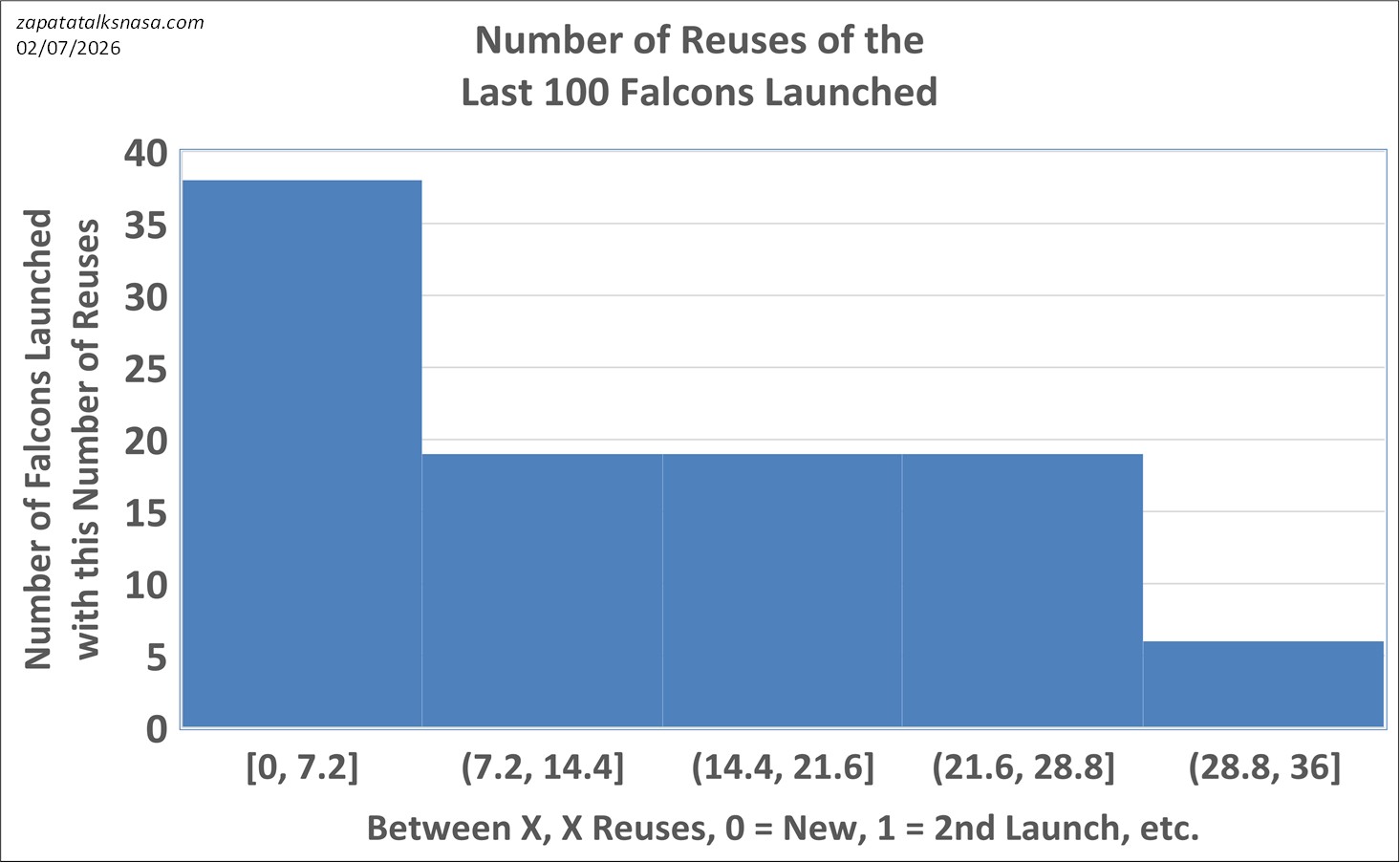
What is this graph above saying? The reuse of most Falcon 9 boosters is “less than” the high twenties. A few boosters have been reused slightly more.
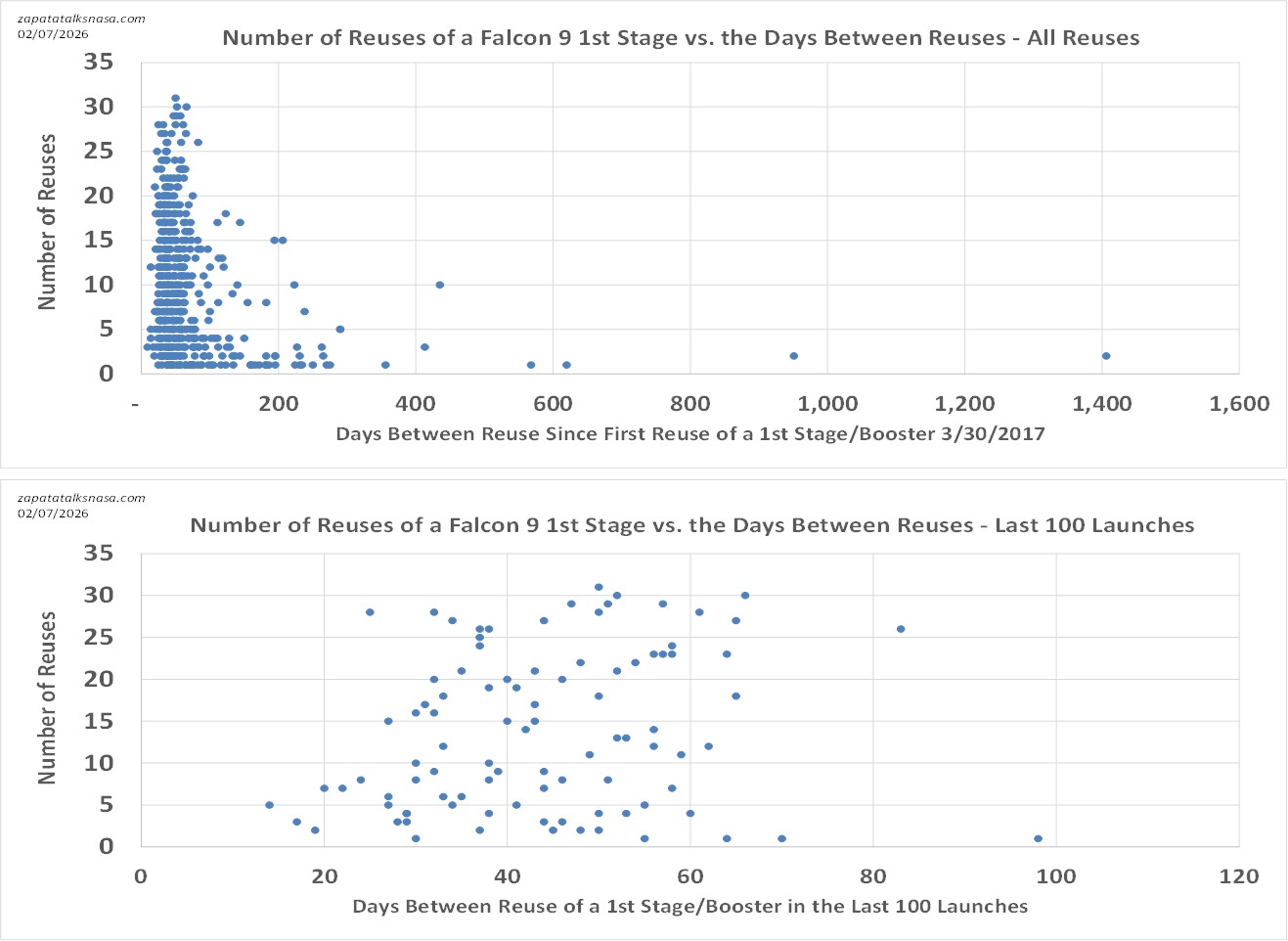
What are these graphs above saying? Curiously and counterintuitively, long-term data since the first reuse of a Falcon 9 1st stage/booster tends to a wider range of turnaround times as the booster is newer. (Would have expected the reverse, that more reuse equals more wear and tear and higher turnaround times, a wider spread of points at the top, and a shift leaning to the right.)
Hypothesis: This is due to familiarity/learning about a unique booster? A new booster is “less familiar” to the turnaround team? But this suggests a production variance that is not reflected in the high reliability of the system.
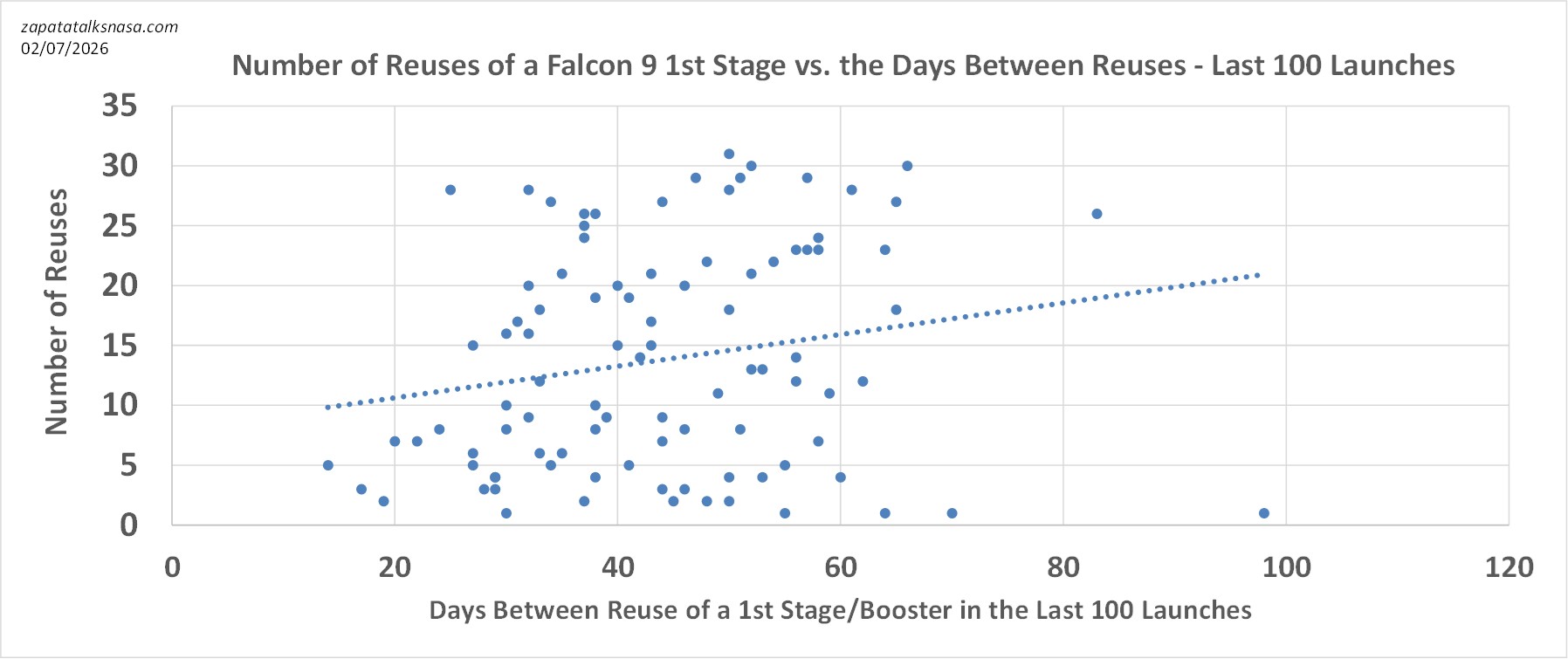
Possible explanation: In the last 100 launches, there is no apparent correlation between the number of reuses of a 1st stage/booster and its turnaround time, but the points do lean to the right, reflecting (1) a more mature operation, and (2) the hypothesis is close, that more reuse equals more wear and tear, so slightly longer turnaround times. This is shown in the graph below, which now includes a trendline.
 Zapata Talks NASA