I have not written a blog in about six weeks, having chosen to dedicate my time to what has become an unexpectedly intensive writing project. Yes, a novel. And so much for optimistic schedules. I hope to complete this around the end of the year, or at least have a complete first draft.
Of course, there is always something happening in NASA, industry, and around the world in aerospace and technology. On the heels of NASA’s cancellation of billions in human spaceflight projects—the larger SLS upper stage, the Gateway, a mobile launcher, and an adapter—we see a new reusable rocket by the Chinese private company LandSpace.
This time, it’s a methalox booster (first stage) unlike the SpaceX Falcon 9, which burns kerosene and liquid oxygen. The methane engines should burn cleaner, easing the turnaround of the Zhuque-3, but only time will tell. The SpaceX Starship in development also chose this path—methalox.
Which brings us to data updates.
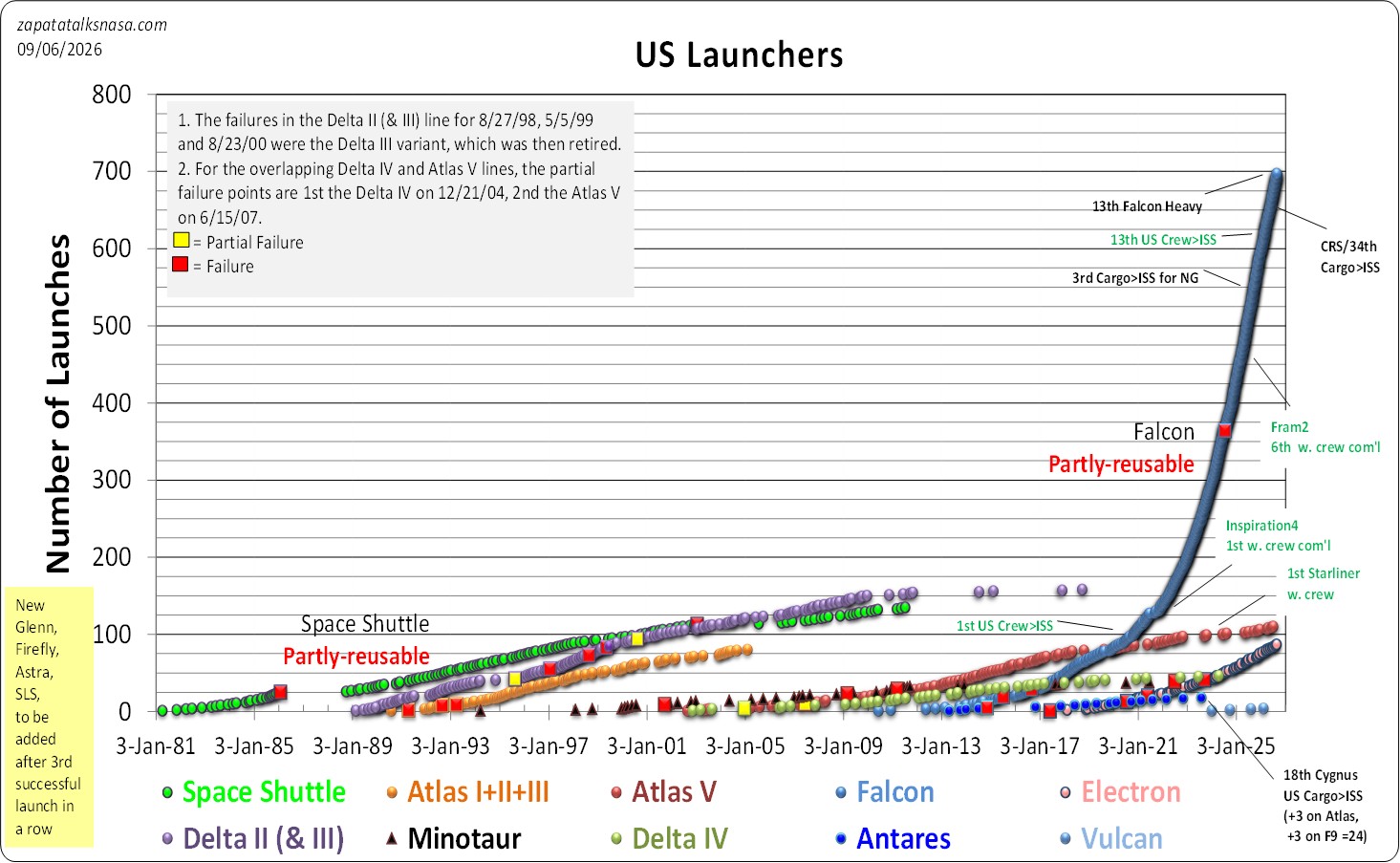
SpaceX does appear to have left all other US launchers behind. For now, the reusable New Glenn is down until they recover from the catastrophic on-pad explosion back in May. That vehicle would have been their fourth, after two successful outcomes in the three prior launches.
Though there is the US company Stoke Space, now conducting fit checks, with a design that would reuse the first and second stages and place around 3 tons into low Earth orbit. Full reuse, returning second stages from orbit, is no easy feat. What velocity has been given to get to orbit, or beyond, must go somewhere to return. We have now seen two “flying brickyards” in our lifetime—the Space Shuttle, and the Starship (upper/orbital stage). Stoke, however, designed a regenerative active cooling system—if NASA still did X-vehicles, this would be one. (Except that the data would be shared with all US companies.) I’d keep an eye on Stoke Space.
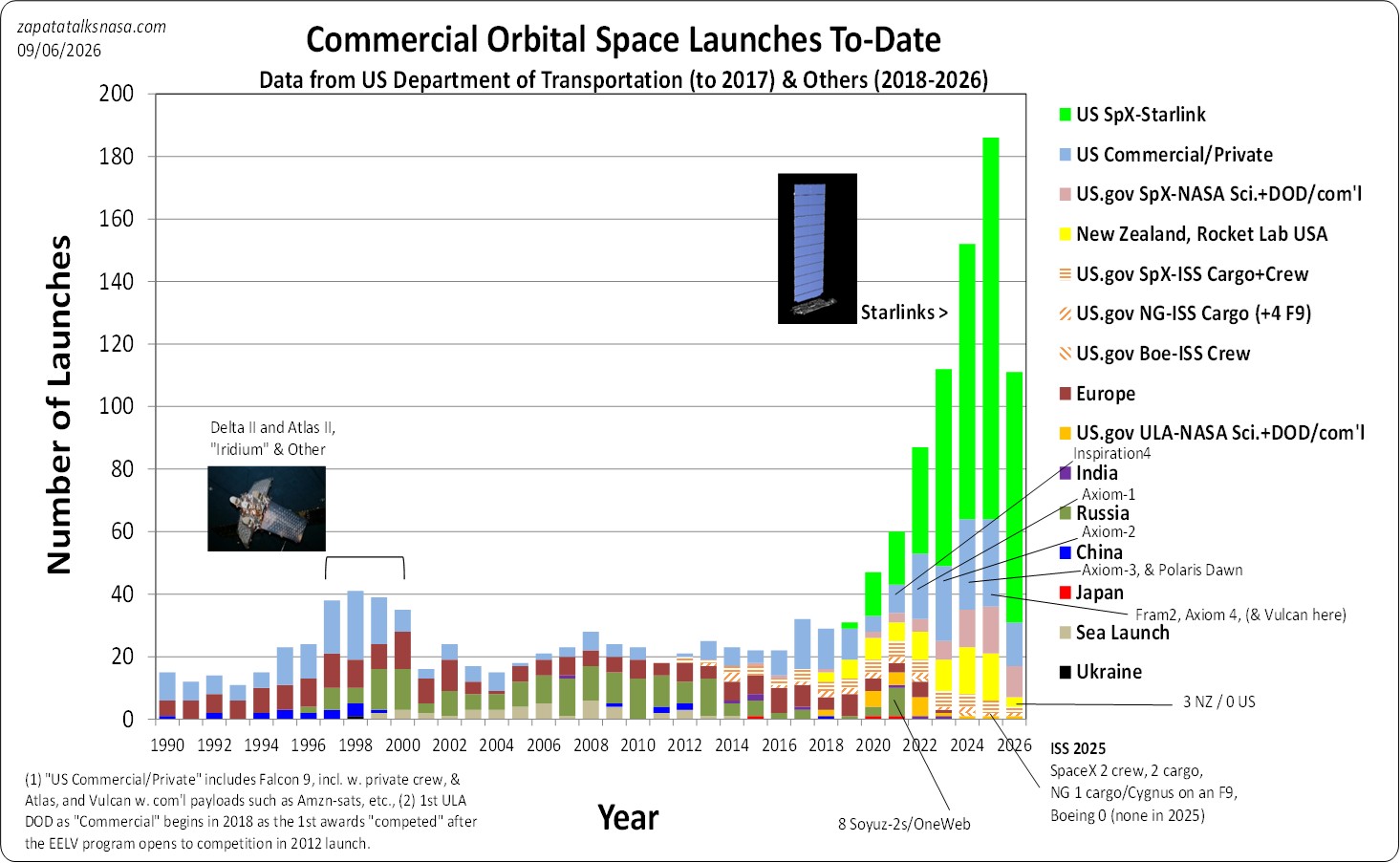
Commercial global launches continue to be dominated by SpaceX as well. Think of this as the Starlink show. Falcon 9 rockets are an internal cost to SpaceX/Starlink, whereas these are sold at a “price”—likely multiples of cost—to everyone else. If Amazon is a company selling goods that also has its own fleet of trucks and planes, SpaceX is a company selling broadband services that also has its own trucks, those Falcon rockets. Was this ever going to happen any other way?
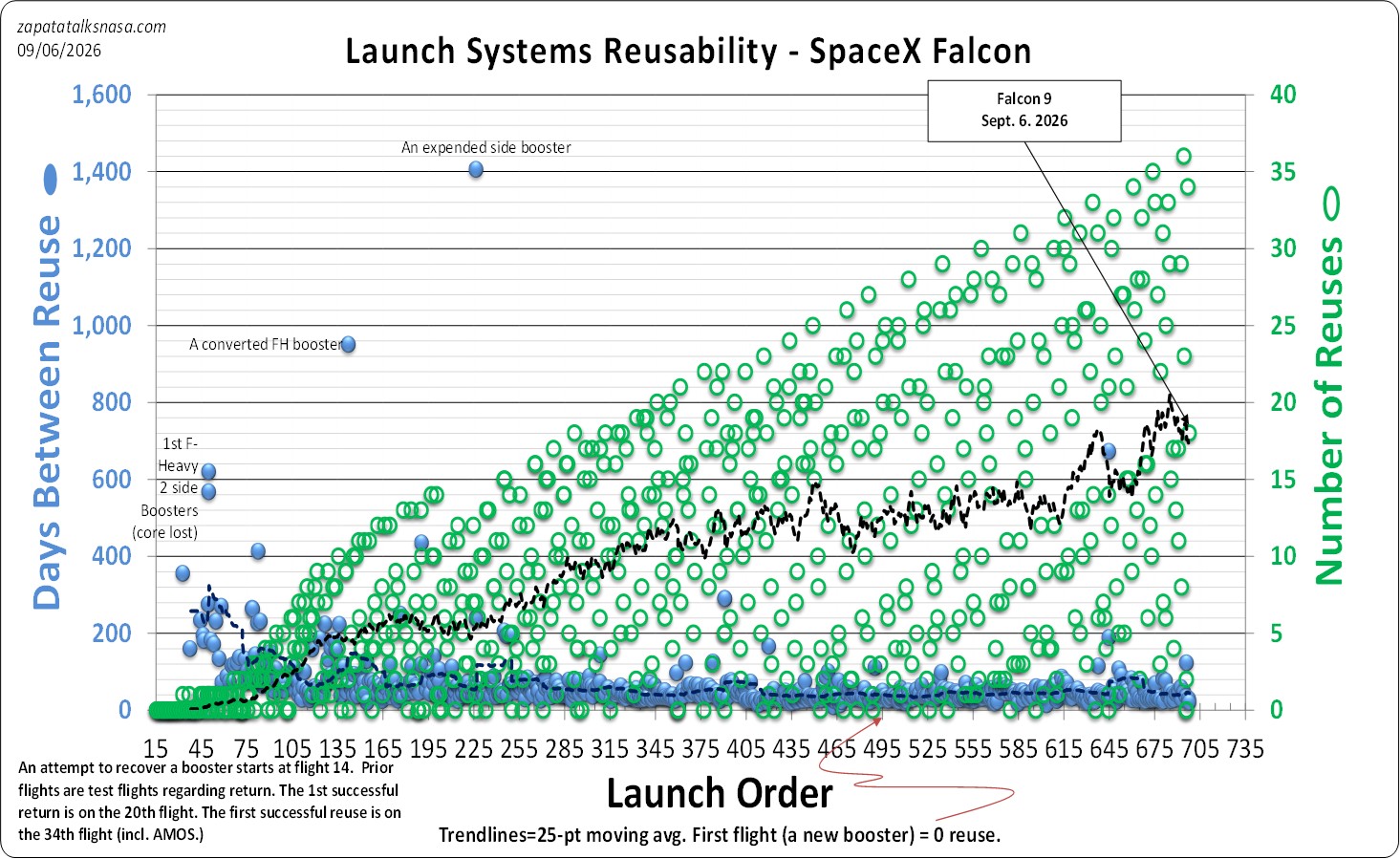
On reuse, SpaceX appears to have pushed the number of reuses of its first-stage booster just a tad further in recent months. Noting that when saying “in recent months” that means fifty launches, much more than all other US companies will launch in the last year combined.
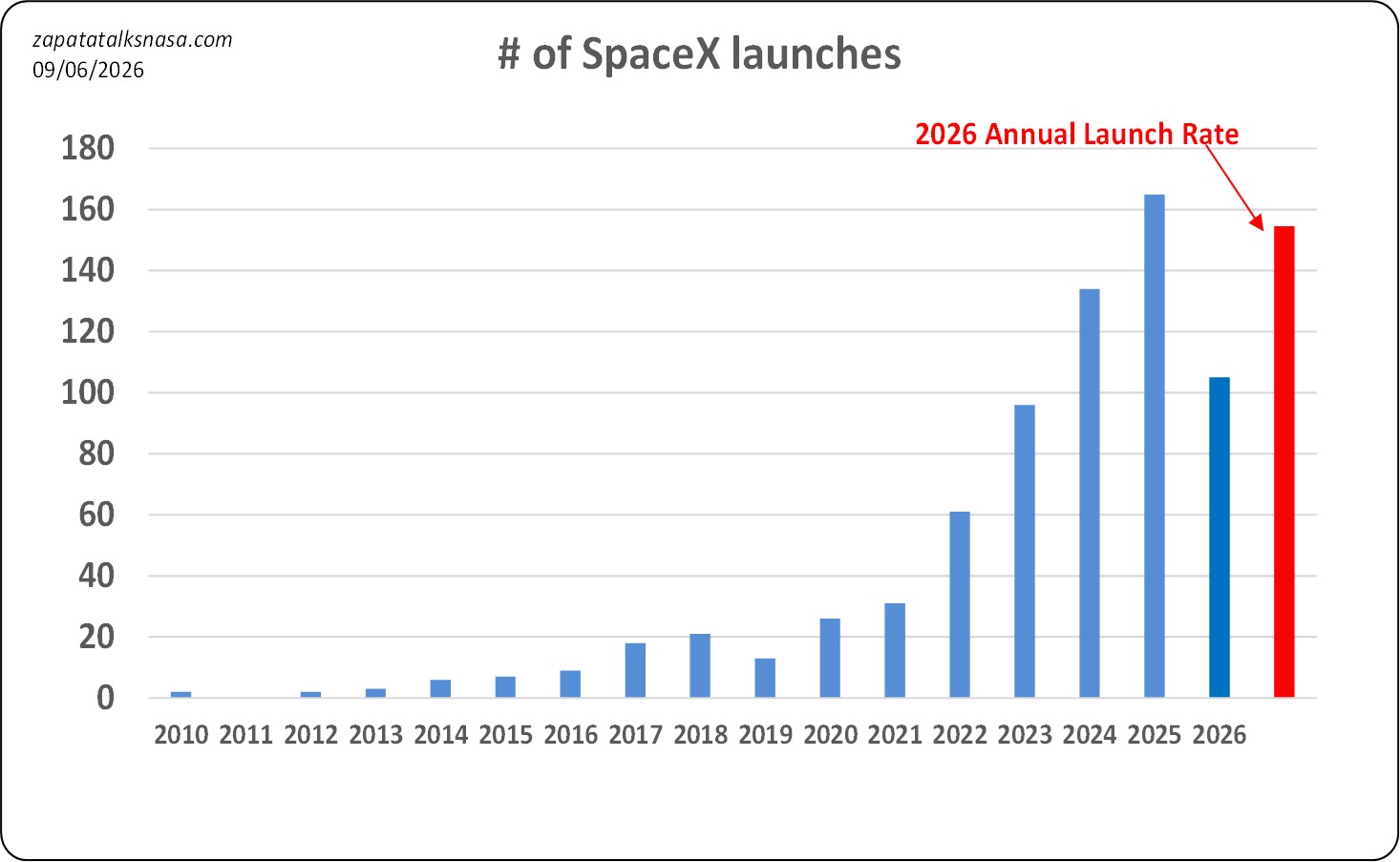
Though, as to launch rate, SpaceX launches of Falcons do appear to be slowing a bit versus 2025.
As always, the latest data, and some of the raw data is available at zapatatalksnasa.com
Regards,
Edgar Zapata


