This is a story about technology, not as a matter itself, contained and explainable with a spreadsheet, but as an action inseparable from a reaction. And oh, that reaction. It’s ancient times, circa mid-1990s, when the internet is something speeding along at 28.8 kilobits per second, on a good day. The normal routine is to make a right to get gas on the way to the Kennedy Space Center in the morning, an easy in and out, except for the part where we do not yet have credit card readers at the pumps. Until today. Seemingly overnight, we have “pay at the pump.” And now I have a story for when I arrive at the office, all about why this is progress we should celebrate! Surprisingly, my audience will not be impressed. They will be the opposite of impressed.
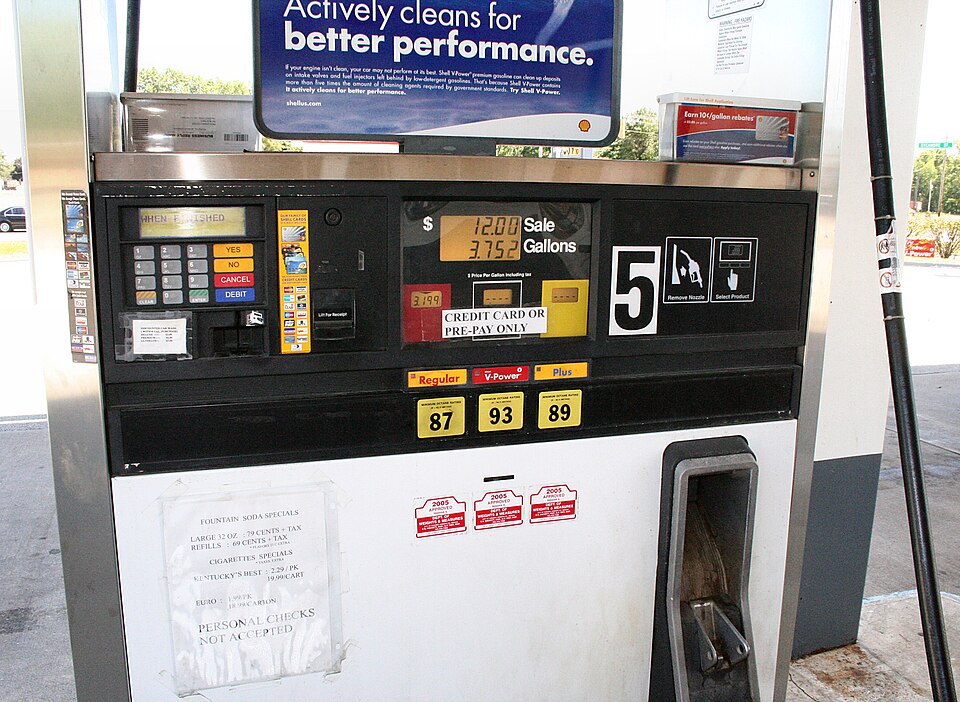
No more having to go inside to leave a ten for pump number 3, or the same with my debit card. No more having to wait in line behind someone who can’t decide which scratch-off lottery tickets to buy. Or asking about the prices of smokes. “The same as yesterday!” I want to yell, or “The prices are right there on the back shelf, in letters an inch tall!” And then the next person in line, who appears to be looking to chat with the attendant about anything, the weather, the game, the kids. World events. Anything but paying and moving along. My prediction is the next person in line will ask if they can pay with a check. From a checkbook they do not have handy. Of course, no one has a pen that works.
Needless to say, I was young, a bit impatient, and firmly convinced I had better things to do than wait in line in the gas station to leave money for a fill-up. But now, and for the rest of my life, I’ll be liberated from asking, as I wait fourth in line, “What fresh hell is this?” Now, finally, we have credit card readers at the pumps. Technology, progress. I can continue to believe tomorrow will always be a little better than yesterday. More importantly, I’ll never step inside a gas station in Florida ever again.
This was news I must share with my co-workers first thing, before we move on to the other minor matters of the day, about fixing Space Shuttles, finding leaks, and replacing valves, yada, yada (It’s true, it’s always the valve.) No more waiting endless minutes behind “that guy” with all those questions for the only person at the cash register.
I thought this would be the start of a humorous chit-chat that morning, until my co-workers did not. “That’s not fair.” “We should all boycott that place.” “I know a gas station in Cocoa that people should support,” because “Those card readers increase the price for everyone.” And my favorite, “I only use cash.” No one was laughing about my cast of characters at a Florida gas station, or excited about the convenience of new technology – the lowly card reader at the pump. Now, of course, I could see the point if we were in a town, a town about three hundred miles away from civilization, but this crowd launched rockets. The only ranch nearby was the rocket ranch. I filed this event away for future reference. It proved to be a harbinger of many discussions I would have about new technology, of the rocket sort to get to space, reusable, expendable, and in space too.
Recently, General Motors installed more robots at a factory where they had also laid off 1,300 employees. These employees are, I imagine, not happy. It is easy to dismiss all this with clichés about how robots do not buy cars, or on the other hand, with hand-waving about “lights-out” operations in factories of the future. But wait, these “dark factories” are not in our future; they have been around since 2009, along with the VP saying you might as well “turn off the air conditioning and heat too.”
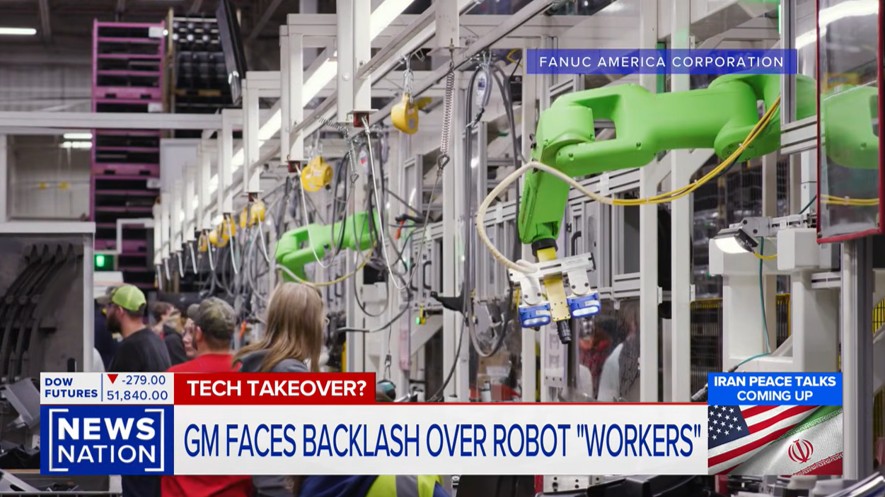
None of these simplifications is useful. An employer that envisions a circular economy where a worker paycheck flows back to the plant may as well find they can’t sell to a public that sees a poorer product at an unaffordable price. Robots, as with advanced machinery and automation, have always been about higher quality, through tighter tolerances and reduced manufacturing variability, unachievable by human hands. The product is more reliable too, complicating comparisons focused only on an up-front price. The product we purchase may often cost more now, but less later.
Technology, we learned in many NASA programs, does not exist independent of people, organizations, and politics, be it the action of these, contributing to the cause, or their reaction. You can come to be so dependent on suppliers, as with Ford or GM, that the joke goes you no longer make cars. You assemble them. I did not make the patio set that arrived in an amazingly compact, if heavy, few boxes. I merely put it together.
All is fine until one day you must play catch-up on a new technology, electric vehicles, and you cannot buy your way into a singular software platform, the heart of the matter. You have become the expert at integrating the hundreds of boxes others provide you.
Naturally, it’s impossible to read such daily news after as many years at NASA and not see the same problems NASA faces. Long ago, the decision on the type of propellant for the Orion spacecraft was a choice up for grabs. The window for analysis making a case one way or another did not last long (unfortunately), and the choice was between a very toxic propellant (which won) and some R&D, some risk, and taking more time for a non-toxic alternative. Old vs. new, or rather, old vs. coming soon, with some effort. At the time, the numbers favored the existing hypergolic propellants – by my own analysis. (Fudge as I might. I had a bias for safer, easier-to-handle propellants.) Except there remained one point I believed should win the day for new propellants and technology – that over time the toxic stuff would have fewer users. Not now, but eventually, meaning those fewer users would get left holding the bag, so to speak. You would own the last buggy whip factory. Basically, my case was to say NASA’s supply chain today was fine, but the patient was trending poorly. Complicating matters, spacecraft development goes the easy route on the path to contracts that assure NASA flies too infrequently to care about R&D enabling spacecraft that launch every few days.
Upton Sinclair had a saying for this – “It is difficult to get a man to understand something, when his salary depends on his not understanding it.”
Second shift at the space center, from 3:30 pm to midnight, because there was enough to get done that it could easily be justified, even if it was a bit of a skeleton crew. My first group strongly advocated for getting the External Tank delivered to KSC as if it were new, which it was. The massive orange propellant tank was the only fully expendable part of the Space Shuttle, and common sense would say the article should not arrive from Michoud, Louisiana, with a long list of planned repairs and inspections, and problems discovered during these, leading to more repairs. The paradigm should be Space Shuttles like Columbia, old cars, always problems, the big orange thing, new car, no problems. This was not the case.
After some years, we stabilized the operational processes. Technology was part of this, but also technique, not only what we were dealing with, but how. A test might be deferred to the launch pad, knowing it had a low probability of failing, or could be fixed quickly even then. A composite intertank door, on at the plant, saving some weight where every pound counted. But also, an earned trust and confidence that Martin Marietta did not leave a wrench behind that door, sealed at the plant. Because a lost screwdriver could prove catastrophic once the propellant is loaded and the contraction forces the top dome of the tank to pinch up against the walls. It came to me as one of my first initiatives from cradle to grave to add up and sell such efficiencies. Enough to make a difference. It also fell to me to present at the “boards” where a missing period in the final language of the new requirements meant back to square one. My bad. I learned the importance of periods and commas, a skill that has come in handy.
After that came awards and pats on the back, and a decision to eliminate second shift entirely for the Shuttle’s External Tank operations. The robots didn’t do this; people did. I would no longer be one of only the handful of cars on the road at the center past midnight. It was a good year, and readjusting to the day shift felt like coming back up above water after a deep dive. Life was good, except it’s never that simple.
The technicians were not happy. No second shift, no quiet time if that’s what you enjoyed. And some reassignments, to the Shuttle Orbiters, to new teams, or to the boosters, or endless ground operations. It would happen to me too, as improvements beget change, and that is not always comfortable. Putting yourself out of a job sounds good, in theory. It’s easy to feel you have to start all over, whereas before you were at the top, the veteran, over where you began. The discontent of the techs was obvious, and I became, for a while, a focus of the curt replies, the loss of friendly faces. I had been a ringleader for some of these “improvements” after all.
My next system had what we would call a stronger immune system, formidable defenses, starting with “We tried that,” and ending with “When I’m dead, you can do whatever you want.” At this time, SpaceX is years away, as is the idea that NASA’s challenges are not just about the thing, some technology, a gadget or a design. It is only starting to surface that “how” is as important as “what” – which sounds obvious only in retrospect. That is, NASA was trapped by its suppliers, offering up the same old parts, and to make matters worse, these well-entrenched designs had “cost-plus” membranes around them all.
So, it’s no surprise to hear recently that NASA had a $500M stage adapter. An adapter. A cylinder between two other cylinders. A cylinder that does not hold propellant. An open-ended cylinder, with no top or bottom, for half a billion dollars. For comparison, the original contract from NASA to SpaceX that led to the survival of the company in 2006 was for about $600M in today’s dollars. This was for a rocket, the Falcon 9, and for a cargo spacecraft that would deliver supplies to the ISS, the Dragon. Yes, for both. These systems contained remarkably little new technology, but SpaceX did reinvent how they came together, and how they would manufacture and operate these.
NASA had finally found a company whose salary did depend on understanding something.
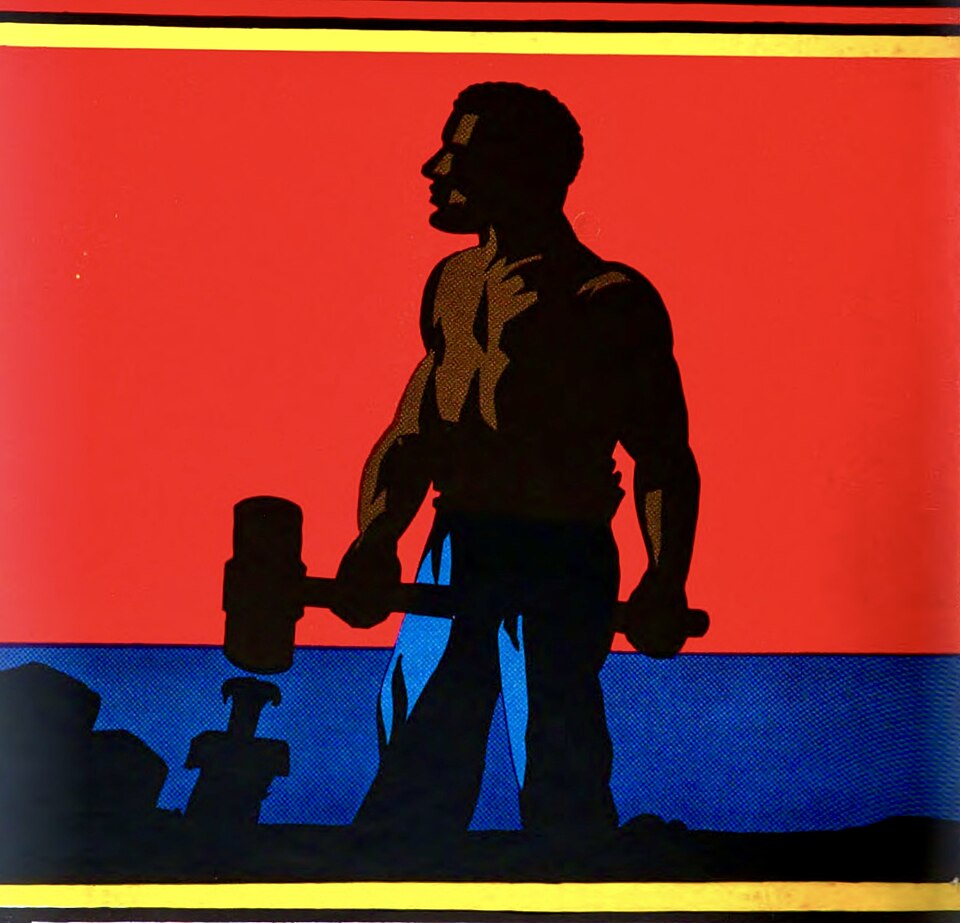
As a child, I was quite familiar with the story of John Henry – the steel driver who won the contest against the machine, only to die from the effort. It was a much-worn vinyl record played while I flipped the pages of the accompanying book, a thoughtful way to engage and teach young readers. “He died with a hammer in his hand.” I was about ten years old. This one too, filed away for future reference. It’s a story as much about the process, human struggle, as the ending, a machine that could care less about our momentary victory. The story is not about technology; it’s about us humans. The machines cometh, what is our reaction?
Every day we can see the headlines about killer-AIs, the job-killer that is. Not the ones that came from the future to terminate us, the ones that are coming to terminate our jobs. The one that will code, write, and think for us. But any headline will do to tell a story about technology, change, and reactions.
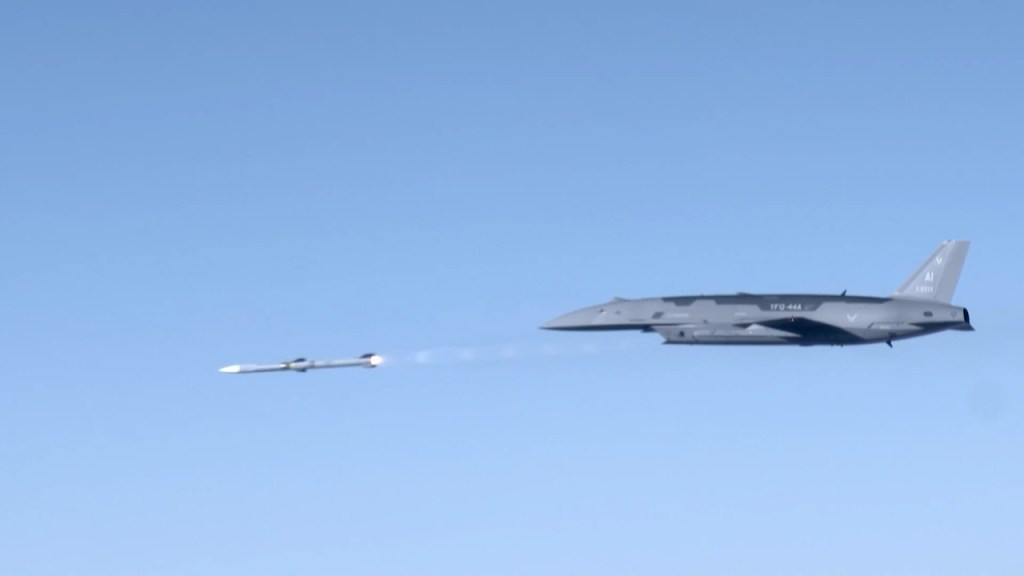
In Ukraine this week, a battle between an old school commander and a younger officer who wants even more drones. A public rally for whoever is with the drones. We read about the President frustrated with electric catapults on aircraft carriers, “that don’t work,” but the technology is one of many items on the path to all-electric ships. Once, we too envisioned all-electric Space Shuttles, the dream of some, the pipe-dream to too many others. Also, just last week the YFQ-44A, an unpiloted aircraft envisioned to accompany fighters into war, performed its first live fire test. Here in D.C., the debate is on over driverless cars (though I’m hoping these atrocities on wheels are soon looked back on as an antiquated step on the way to what we saw in Westworld.)
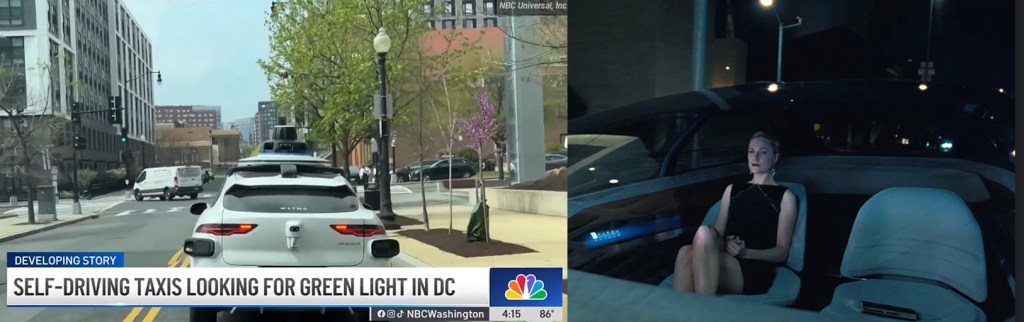
Reactions to all this could go the way of my experience with the gas station card readers. “That’s not fair.” It’s a continuing oddity prevalent in NASA that the reaction to new technology often comes in similar flavors, a knee-jerk risk aversion married to not-invented-here. Disruption is difficult. When Jeff Goldblum’s transporter pods are finally here, the first thing some of us will say is, “It’s about time!” and then we will ask to go on the next run right after the baboon. Or at least, in my vein of work, I would be there advocating for funding, and more baboons leading to human trials. Saying again, “Finally, some progress.”
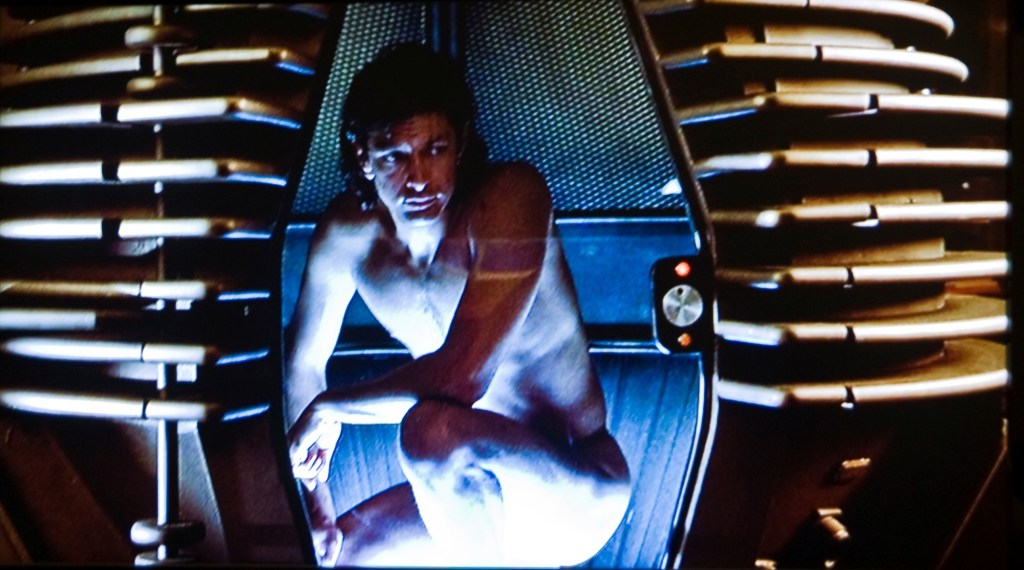
The Fly is usually seen as a story rich with classic Cronenberg body-horror – Is this even my body after I go through this machine, get shredded, and am reassembled? Filed away for future reference. What we have is a classic story in the spirit of Frankenstein, technology-horror. Or, aka a Star Trek Transporter, when it comes along, some of us saying as we wait in line at the airport, there has to be a better way. Which transporter pad do I step on? None of which, the horror or the eagerness, may change much. It’s pay at the pump, all the way down.
Our conversations about technology must find a better way forward. Not only for the FAANG software-type technology that makes all the news, but for what we touch or will one day reach out and touch us.
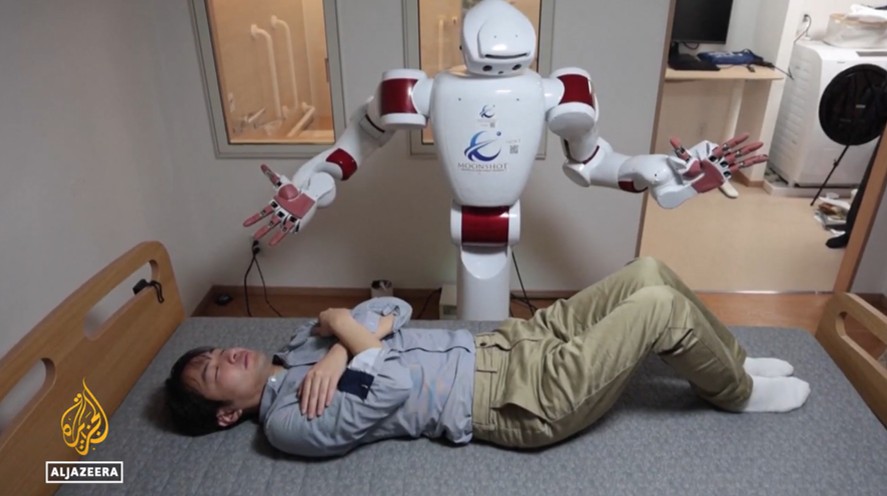
In the long history of Space Shuttle improvements and technology upgrades, then about new launchers that would fly much more often and affordably, a critical item goes unsaid. NASA teams working on these investments knew we had a payload problem, a disconnect between our work and reality. It was a question we knew at the time haunted us in the background of any analysis, advocacy, or business case. Even if we figured out how to improve a design and an operation, allowing us to fly more often with the same workforce, the payloads would not be there. NASA lived in a zero-sum game – its budget. An ability to launch more often had to ask – launching what? Payloads cost money. Money NASA would not have. We would be all dressed up with nowhere to go.
Eventually, this question was answered – the private sector could use such a system. New and more payloads for unimagined needs. SpaceX has been the inevitable end-point to this often said but never documented sense that an advance can’t exist on its own terms, to reduce costs, to reduce a workforce. It must exist for a better reason. The SpaceX Falcon 9 and its incredible productivity go hand in hand with a Starlink constellation bringing broadband the world over. Technology, meet a growing workforce.
Tonight, Starship test launch number 13 will, everyone should hope, prove a lucky number. Although a test, the ship will also be “carrying next-generation Starlink V3 satellites for the first time.” The inevitability of reusable launch has proven true, if not how NASA expected. Not V-shaped, or plane-shaped. Not a lifting body based on an X-33, or a massive Shuttle-orbiter-ish thing, wings and all. Those medals that said, “We dreamed, we dared, we made history.” Well, they got the dreamed and dared spot on, but the made history part would come at NASA from unexpected corners.
Technologists at NASA eventually learn we don’t get paid to answer questions, though that may seem to be the case. The best answer to a question is discovering an even better question. It’s not about the benefits of a technology, efficiencies, or less cost. Or fewer hands-on deck. It’s about what we can move on to, exploring more, growth, not retreat. When the pictures only show the robots, not the people with them, something is amiss. In-space manufacturing, from medicines to materials, will succeed with all the workers down below who make it so.
One day, a version of Starship for NASA, a lunar lander version, will carry people. When that day comes, it will be a driverless vehicle. It will have filled up at the pump, in space. Fuel depots in Earth orbit are also an inevitable technology – one which NASA teams worked toward at risk to their careers. The robot will get refueled by a robot, to carry people beyond Earth.
The better question, where we want to say “Yes” – at that fuel station in space, will there be a line?


Thank you Edgar, I always enjoy reading these articles. Frank
LikeLike
Thanks Frank. More to follow on this topic, as it’s the main reason I began writing years ago. Technology, change, a way forward. When we look to the future of any technology, it must include people, more not fewer, or none.
LikeLike